The FutureEverything Story: Part 3
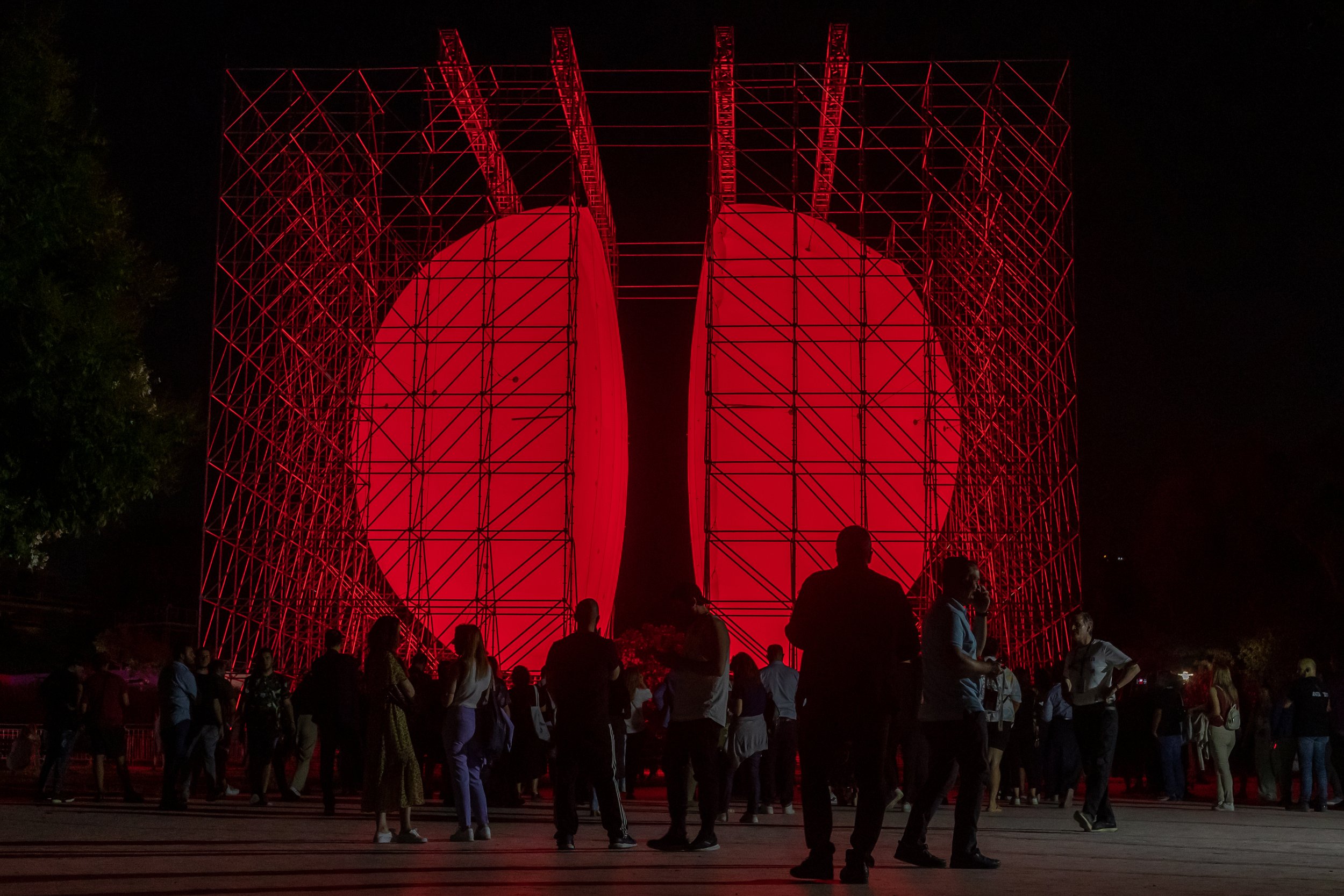
DIVIDED by Spy (2022) at Plasmata: Bodies, Dreams & Data. Photo © Pinelopi Gerasimou, 2022
From cultural agency to nature-directed futures: art, technology and the planet.
Author: Drew Hemment
FutureEverything's final years were among its most ambitious – large-scale AI arts exhibitions reaching millions, major commissions including Rafael Lozano-Hemmer's Atmospheric Memory, and a trailblazing final initiative that reimagined FutureEverything as a vehicle for ecological resilience, and made it the first cultural organisation anywhere to appoint Nature to its Board. This period is marked by both creative ambition and institutional courage.
This third and final part of The FutureEverything Story covers the period from 2019 to 2026 when the organisation was led by first Irini Papadimitriou and then Lucy Rose Sollitt as Creative Director, with Chris Wright joining in 2020 and becoming Executive Director in 2021. FutureEverything operated in this period as a cultural agency, no longer anchored to a festival but delivering ambitious international programmes. Whereas the first two parts of The FutureEverything Story covered events in which I was directly involved, and were written by doctoral researcher Bilyana Palankasova in collaboration with me, this section reflects on the period after I handed over leadership, drawing on my perspective as founder and the organisational archive assembled by the team.
2019–2021
Irini Papadimitriou took the helm of FutureEverything in 2018, bringing a curatorial vision that would establish the organisation as a significant international voice on art and artificial intelligence. The landmark commission of this period – and one of the most significant in FutureEverything's history – was Atmospheric Memory by Rafael Lozano-Hemmer, developed with José Luis de Vicente as curator. Produced in collaboration with Manchester International Festival, the installation invited visitors into an immersive encounter with breath, data and collective memory – encoding the exhaled air of participants into light, sound and sculptural form. The New York Times described it as 'the most ambitious art project of the festival' and it received deserved acclaim for its immersive, technologically inventive fusion of art and science. Initiated during my time at FutureEverything following an invitation from Manchester International Festival's Artistic Director, John McGrath, it later toured globally – a measure of both the scale of the work and its capacity to speak across cultural contexts. Atmospheric Memory marked the culmination of a long creative partnership with José Luis de Vicente, who had worked closely with FutureEverything over many years before this – contributing curatorial depth and critical perspective that shaped the organisation's direction across a defining period.
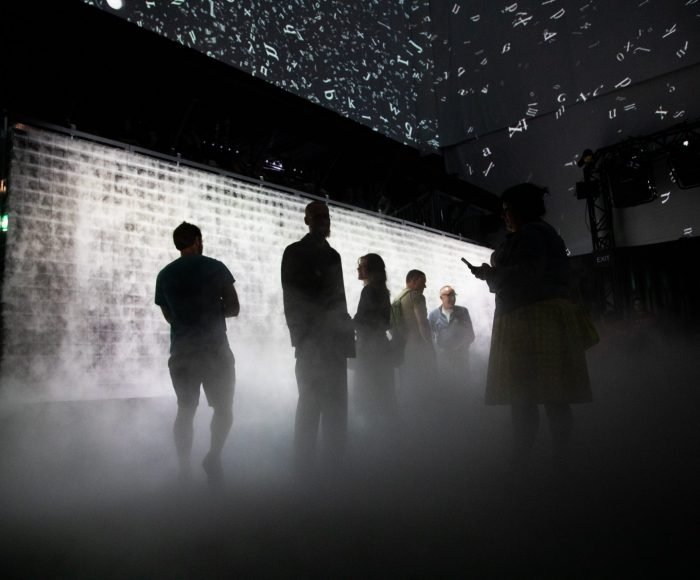
Atmospheric Memory - Cloud Display by Rafael Lozano-Hemmer (2019). Commissioned by Manchester International Festival, FutureEverything and Manchester Museum and Science and Industry. Photo Mariana Yáñez, 2019.
The COVID-19 pandemic suspended in-person events globally from early 2020, reshaping cultural life at a moment when FutureEverything's international programme was building momentum. The organisation responded by launching Future Focus, an online event series that ran until 2024, sustaining critical conversation and creative exchange among artists, technologists and thinkers across nine editions and 1,400 attendees. Innovate Manchester, developed with MIDAS and GC Business Growth Hub, convened organisations across sectors around pressing challenges including sustainability and digital transformation – an early signal of the cross-sector convening role FutureEverything would increasingly occupy.
Alongside this, this place [of mine], a major digital placemaking commission from Greater Manchester Combined Authority, launched in October 2021. The programme brought together young people from across the region to reimagine the future of their high streets using art and technology as tools for community agency – ten young producers, five artists and a virtual gallery reaching 4,000 viewers. It was characteristic of FutureEverything's civic ambition: grounding international thinking in the specific lives and places of the communities it served.
That same year, Irini Papadimitriou launched You and AI: Through the Algorithmic Lens in partnership with the Onassis Foundation in Athens – the first of what would become a defining strand of FutureEverything's final years: large-scale international exhibitions bringing critical and experiential perspectives on artificial intelligence to broad public audiences. At a moment when AI was becoming one of the central questions of public life, You and AI positioned FutureEverything as a leading cultural voice on AI – holding open a public cultural space in which those questions could be encountered through art rather than through hype or alarm. Presented across four weeks at Pedion Tou Areos, it brought together 30 artists through immersive installations, online experiences and participatory events, before travelling to Maker Faire Rome. With over 80,000 visitors across both venues, it was one of the most significant contributions to public understanding of AI through the arts in Europe at that time.
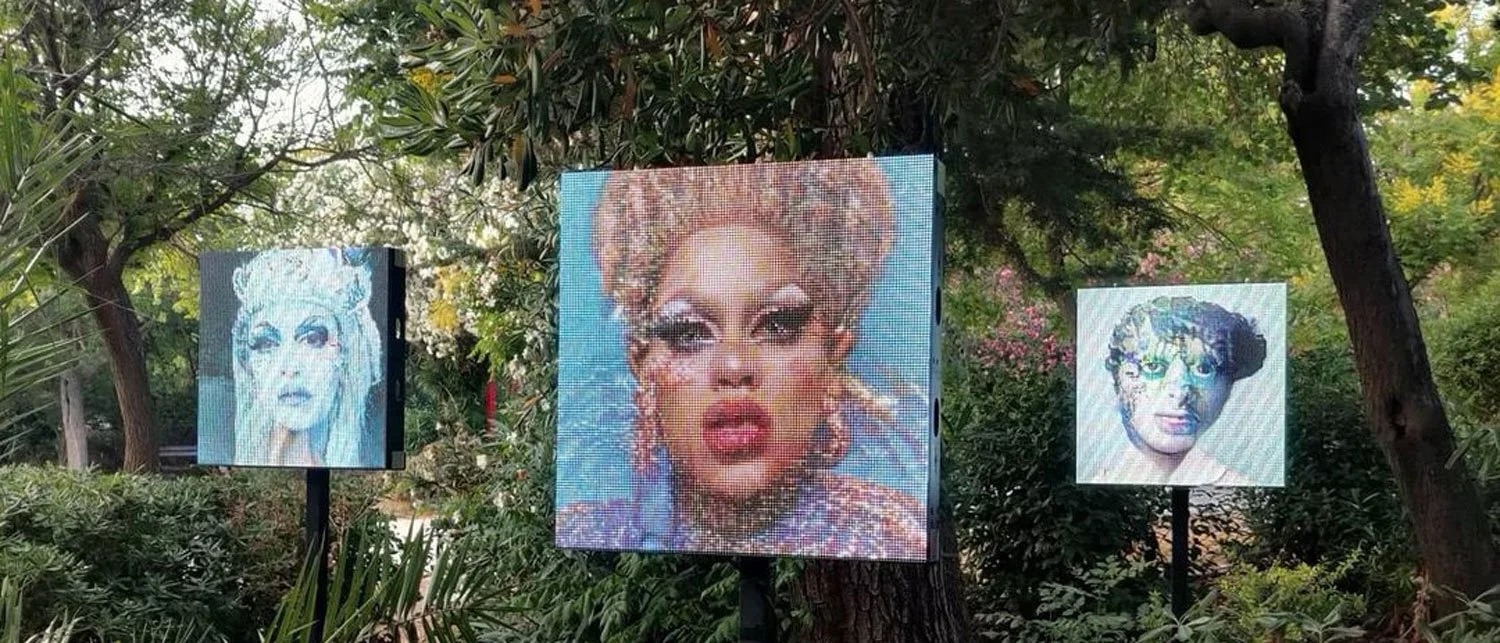
Zizi & Me by Jake Elwes (2021) at You and AI Through the Algorithmic Lens, Athens. Photo Onassis Foundation, 2021.
2022–2023
FutureEverything extended its commitment to artist development through two significant international programmes in 2022. [Digital] Transmissions, developed in partnership with the British Council in Jordan, supported emerging artists through mentorship, creative research and experimentation with digital and immersive practice. Running across three seasons, it engaged 34 artists and drew over 12,500 visitors to its exhibitions. In parallel, FutureFantastic – developed with Jaaga's BeFantastic initiative in India as part of the British Council's India Together UK Season of Culture – brought together artists exploring art and AI, reaching over 3,000 visitors. Both programmes reflected FutureEverything's long-standing belief that digital culture gains its vitality from diverse communities and perspectives
The partnership with the Onassis Foundation continued with Plasmata: Bodies, Dreams and Data, a major exhibition in which international artists inhabited the contested terrain of the posthuman body – probing how technology reshapes identity, desire and what it means to be alive. Uncompromising in its ambition, it reached 400,000 visitors in person and a television audience of 3.5 million – figures that speak to the cultural reach Irini Papadimitriou built for FutureEverything during this period.
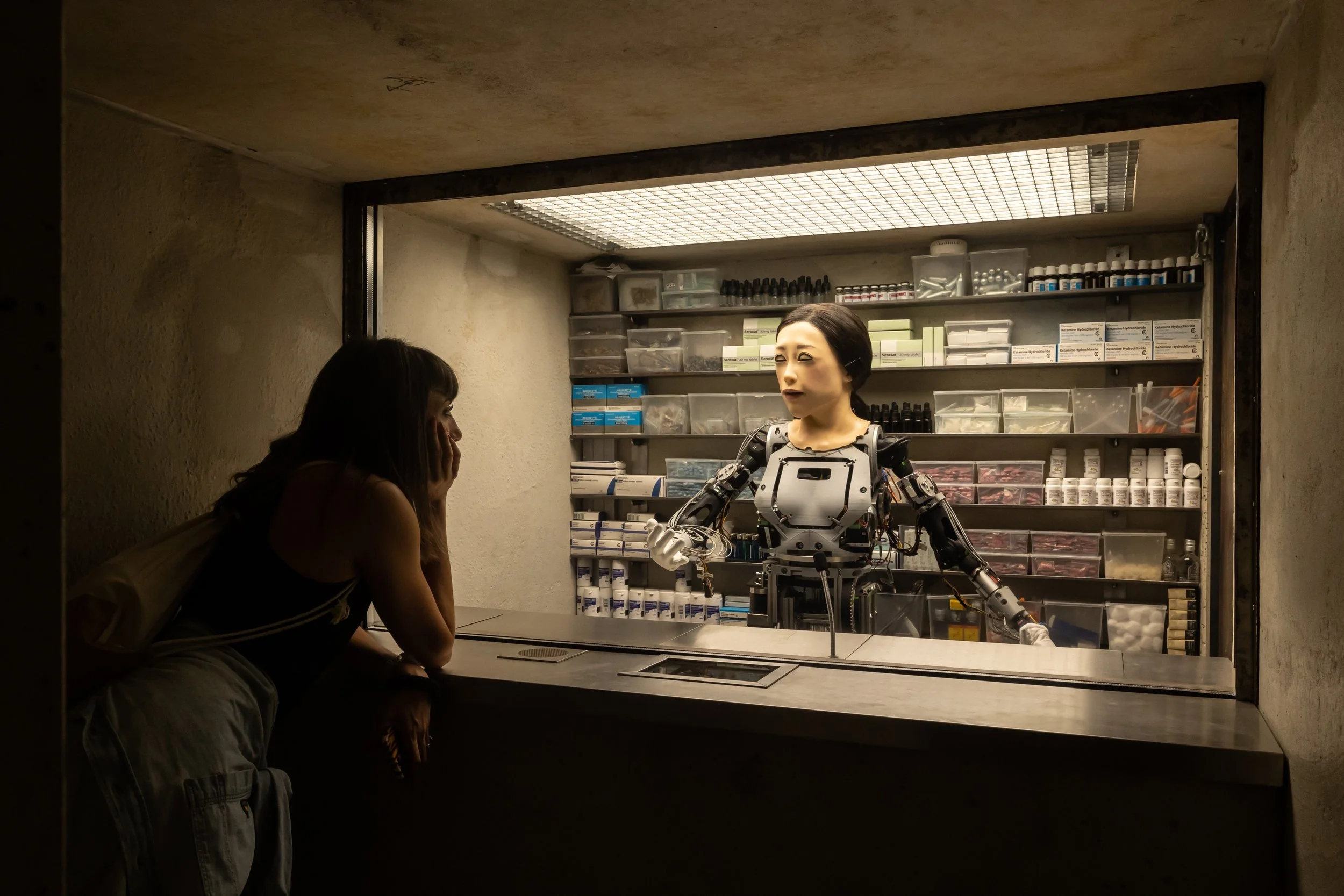
Happiness by Dries Verhoeven (2022) at Plasmata: Bodies, Dreams & Data. Photo © Pinelopi Gerasimou, 2022
In partnership with the National Trust, Unintended Consequences (2022) offered a counterpoint – an exhibition grounded in place, using the Quarry Bank mill site as a lens through which to examine the environmental legacy of industrialisation. With 129,000 visitors, it foreshadowed the ecological concerns that would come to define the organisation's final years.
Also in 2022, FutureEverything developed its Innovation Labs programme in partnership with the University of Manchester, with clients including the University of Oxford and the National Trust. A focused, design-led format bringing together people across sectors to address shared challenges and co-develop new approaches, the Labs were led by Chris Wright, whose executive role gave continuity and direction to the organisation's development activity. They extended FutureEverything's convening capacity beyond the arts into research and institutional contexts – a strand of work that continues into the final weeks of the organisation's life.
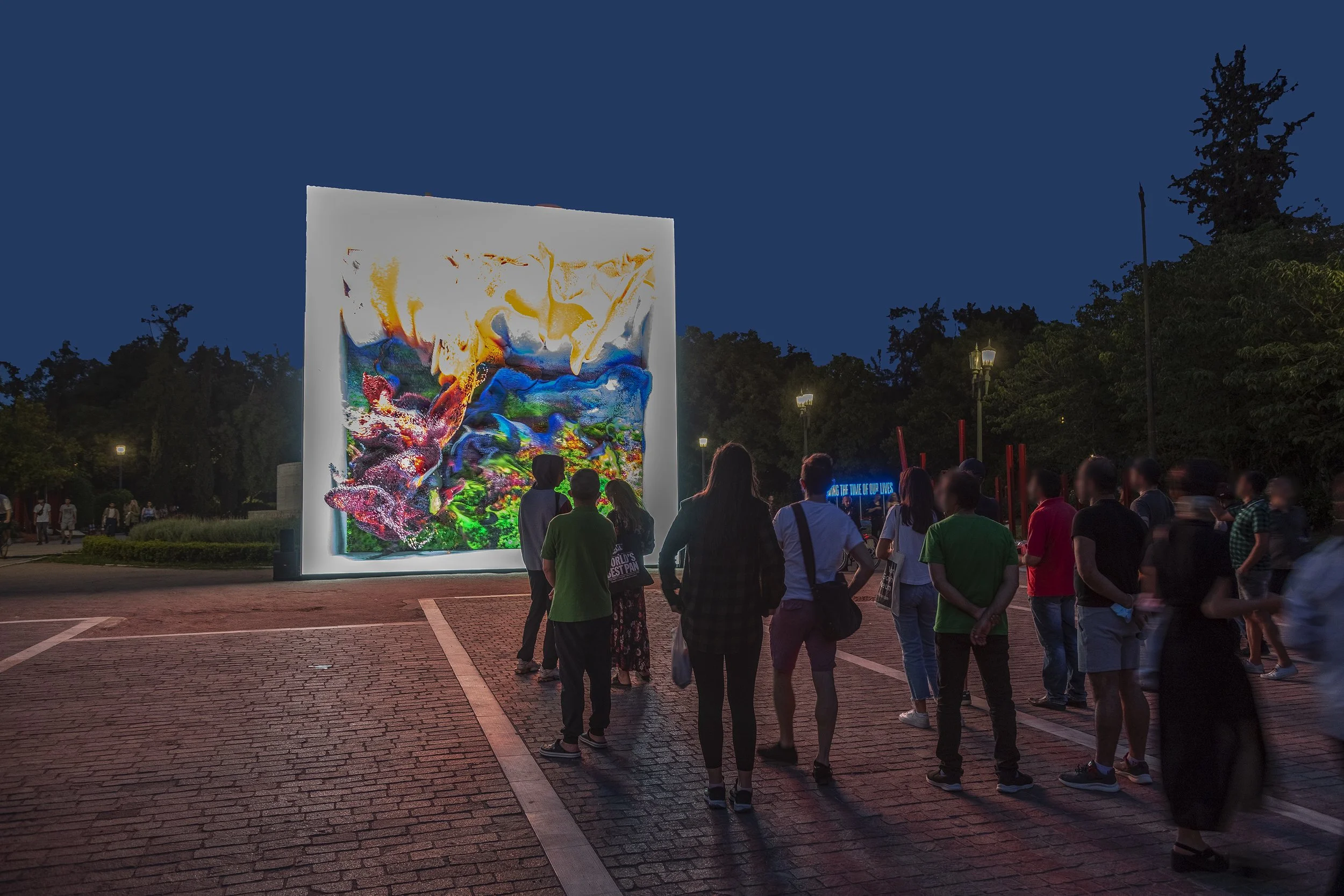
Quantum Memories – Probability by Refik Anadol (2022) at Plasmata: Bodies, Dreams & Data. Photo © Stelios Tzetzias, 2022
The year 2023 brought significant structural change. The loss of National Portfolio Organisation status from April removed a core strand of public funding, placing fresh pressure on an organisation already navigating a demanding post-pandemic landscape. FutureEverything continued to develop new programmes, though the funding environment would prove an increasingly defining constraint in the years that followed.
2024–2026
In June 2024, Lucy Sollitt was appointed Creative Director, bringing with her an urgent focus on ecological restoration, nature-led thinking and the question of what responsibility a cultural organisation holds towards the living world. Chris Wright continued as Executive Director and co-leader of the organisation
The boldest initiative of FutureEverything's final years was Nature Directed – a programme that repositioned the organisation around ecological practice, working with communities, creative technologists and more-than-human collaborators to develop regenerative technologies grounded in people and place. Where FutureEverything had long explored the social and civic dimensions of technology, Nature Directed extended that to reimagine the organisation itself as a vehicle for ecological resilience, merging art, technology and ecological thinking. Its inaugural project, Compost Computer – developed with the University of the Arts London's Critical Climate Computing team – transformed bio-energy from compost into electricity, demonstrating how local internet infrastructure could be reimagined with an eco-social purpose: technology not extracted from the earth but returned to it.
In October 2025, FutureEverything appointed Nature to its Board of Directors – the first arts and cultural organisation anywhere to do so. The culmination of a twelve-month process, it was a concrete institutional commitment to hold the interests of the more-than-human world at the centre of governance. Together, Nature Directed and this act of governance reform constituted a final statement of what FutureEverything believed cultural organisations could be.
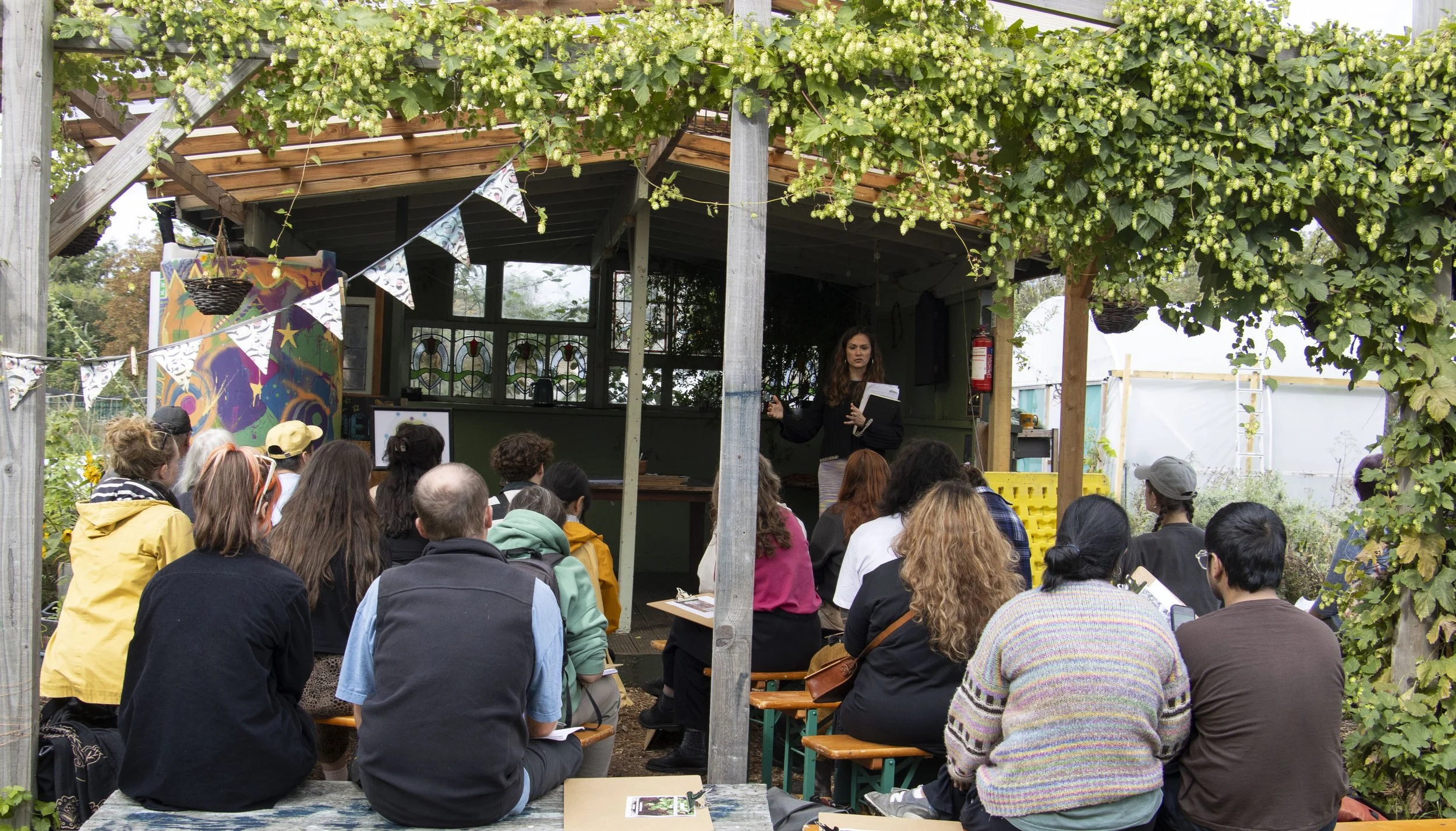
Nature Directed workshop, 2025. Photo FutureEverything.
Alongside this, FutureEverything brought its expertise in artist development back to communities closer to home. PROTO (2024) supported 270 artists across Barnsley, Doncaster, Stockport and Leigh in building confidence and skills in digital practice, reaching audiences of 67,000. Cultural Accelerator, in partnership with MediaCity Technology and Innovation Hub, paired artists with private sector digital organisations to develop new commissions and R&D projects. The deepening relationship with Stockport Creative Campus produced Emotional Biodiversity, an immersive commission by Di Mainstone exploring biodiversity loss through art, technology and community co-creation, seen by over 107,000 visitors. Electric Echoes by Maya Chowdhry – a sonic excavation of the contested history between the River Goyt and Stockport's former power station – continues into the final weeks of the organisation's life.
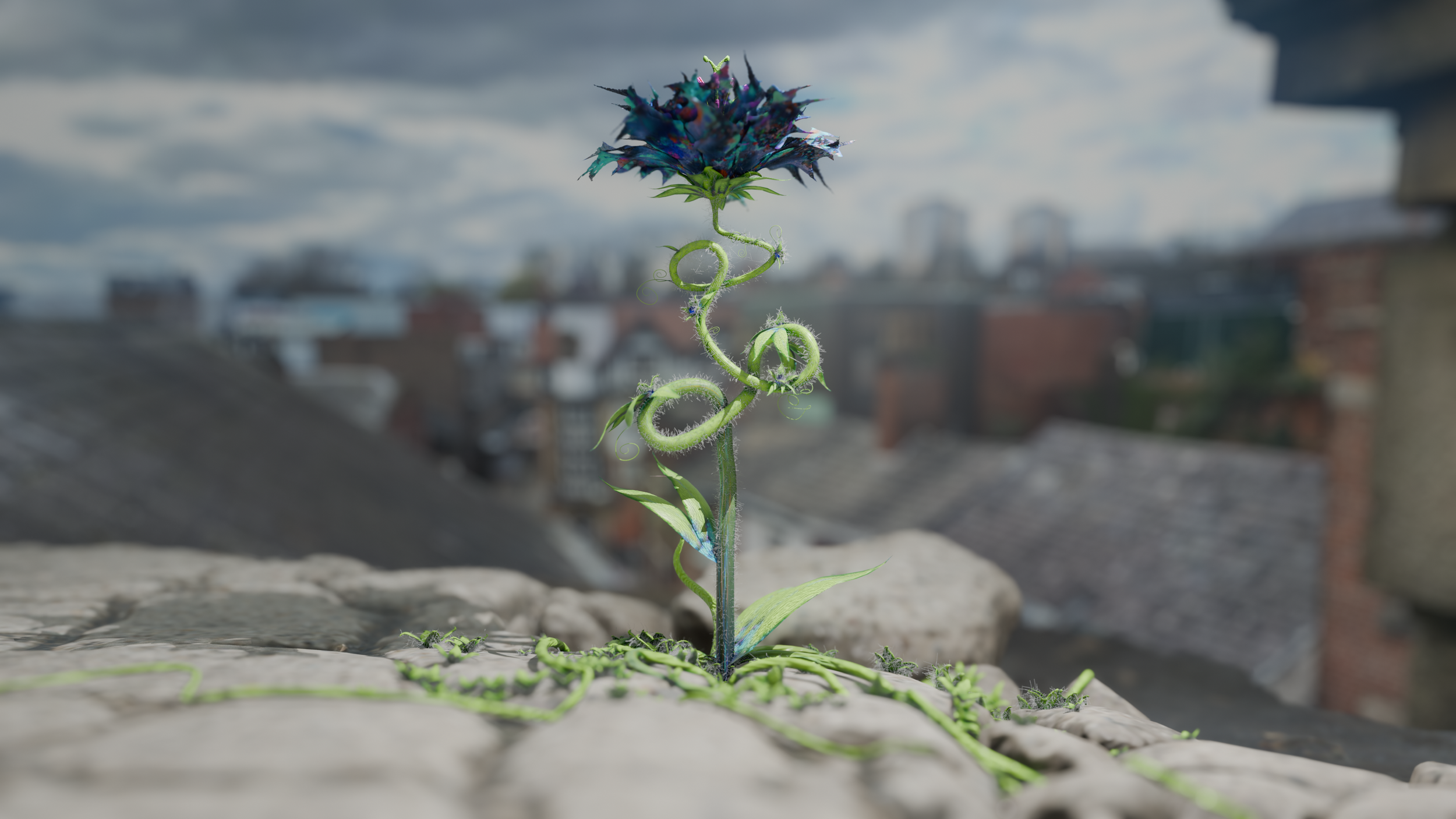
Emotional Biodiversity by Di Mainstone (2025). Image Di Mainstone, 2025.
FutureEverything closes as a company on 4 April 2026. Its thirty-one years leave a body of work, an international community, and a set of ideas that outlast any company. So much of what it pioneered is now woven into the fabric of how culture, technology and society intersect; that is a different kind of permanence. In 2026, Arts Council England announced that digital arts – the field FutureEverything helped to shape – will be its tenth supported artform. Nature Directed will continue beyond the closure. So will the fields FutureEverything helped to open, the practitioners it supported, and the conviction – carried across three decades and multiple waves of technological change – that culture has a leading role in shaping the futures we inhabit.